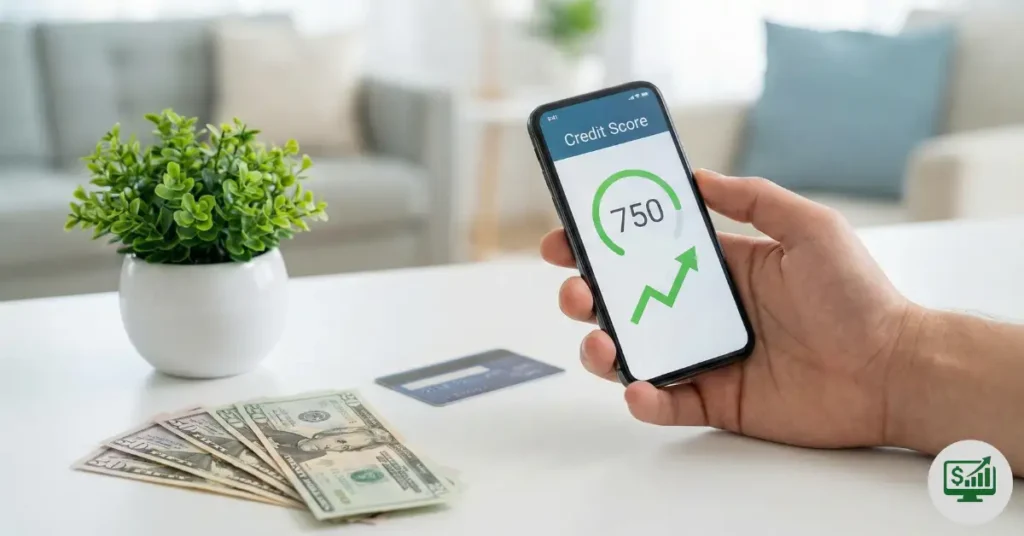
I still remember the day I opened my banking app and saw my credit score drop to 530.
My stomach flipped. I felt stupid… embarrassed… and honestly, a little scared.
At the time, I didn’t even fully understand what a credit score actually meant — I just knew it was bad, and it was affecting everything from my apartment applications to my car insurance rates.
So today, I want to give you the explanation I wish someone had given me back then —
the simplest, most human breakdown of what a credit score truly is… and why it matters.
Promise Before We Begin
I’ll explain credit scores in plain English, with zero jargon, and with the same clarity that helped me go from 530 to 760.
By the end of this article, you’ll understand:
- What a credit score actually measures
- How lenders use it
- What impacts the score (FICO factors)
- Why your score can change suddenly
- The first steps to start improving it
You’re not alone — and this stuff is easier than you think.
So… What Is a Credit Score? (Simple Version)
A credit score is just a trust score.
That’s it.
A three-digit number (300–850) that tells lenders:
“Can I trust this person to pay back the money they borrow?”
It’s basically your financial reputation — measured by how you’ve handled credit in the past.
When my score was 530, lenders weren’t judging me as a person…
They were judging the risk based on my past:
- High credit card balances
- One 30-day late payment
- A medical collection I ignored for too long
Your score isn’t a moral grade.
It’s just data.
Why Your Credit Score Matters (But Isn’t Everything)
A higher score can help you:
- Get approved for apartments
- Qualify for lower credit card interest rates
- Save thousands on car loans
- Get better insurance premiums
- Avoid deposits on utilities
A lower score doesn’t mean you’re irresponsible…
It usually means life happened — job loss, medical bills, or you simply didn’t know the rules (that was me!).
The good news?
Scores can improve faster than you think.
The 5 Pieces That Make Up Your FICO Score (Super Simple)
This is where everything finally clicked for me.
Your credit score is based on five ingredients — and some matter way more than others.
1. Payment History – 35% (The Big One)
Do you pay bills on time?
Even one late payment (30+ days) can hurt your score.
I learned this painfully — a single missed payment dropped me nearly 80 points.
2. Credit Utilization – 30%
How much of your credit card limit are you using?
Example:
If your limit is $1,000 and you use $800 → 80% utilization = bad for your score.
Under 30% is good.
Under 10% is excellent.
High utilization was my biggest mistake. I was using my cards like income, not a tool.
3. Length of Credit History – 15%
How long you’ve had credit accounts.
Older accounts = better.
This is why I never close my oldest card (even though the rewards suck).
4. Credit Mix – 10%
Do you have different types of credit?
- Credit cards
- Car loan
- Student loans
- Mortgage
You don’t need all of them — just don’t rely on only one type forever.
5. New Credit / Hard Inquiries – 10%
Every time you apply for new credit, a “hard inquiry” hits your report.
One or two = fine
Many in a short time = risky to lenders
When I was rebuilding, I stopped applying for anything for 6 months. That alone stabilized my score.
Why Your Score Goes Up and Down
Your credit score isn’t fixed — it moves based on your habits.
Here are the reasons scores change most often:
- Your balances go up ↓
- You pay down debt ↑
- A credit card reports a lower limit ↓
- You miss a payment ↓
- A collection gets removed ↑
- A new account ages ↑
- You apply for new credit ↓
Once you understand the FICO formula, these changes make total sense.
How to Start Improving Your Credit Score Today (Simplest Action Plan)
This is exactly the system I used:
Step 1 — Today: Check Your Credit Reports
Go to AnnualCreditReport.com (free, official).
Look for:
- Errors
- Old addresses
- Duplicate accounts
- Collections that don’t belong to you
You cannot fix what you don’t understand.
Step 2 — This Week: Drop Your Utilization
This alone raised my score from 530 → 600+.
Try:
- Paying balances down before the statement date
- Asking for a credit limit increase
- Spreading spending across multiple cards
Step 3 — 30 Days: Build Positive Payment History
Set autopay for at least the minimum on every account.
Late payments are the #1 score killer.
Step 4 — 90 Days: Add One Positive Account (If Needed)
If your credit file is thin:
- Secured card
- Credit-builder loan
- Authorized user on a family member’s good account
This helps your file look healthier to lenders.
Step 5 — 6 Months: Dispute Any Valid Errors
If you find mistakes, use this simple template I used:
Mini Dispute Letter Example
To Whom It May Concern,

I am writing to dispute inaccurate information on my credit report.
The following account is incorrect:

Creditor: __________
Account Number: __________
Reason for Dispute: (Not mine / Reported late in error / Incorrect balance)

Please investigate and remove or correct this item.

Thank you,
[Your Name]
Keep it simple. The bureaus must respond within 30 days.
Beginner Mistakes That Hurt Scores the Most
These were my biggest issues:
- Using more than 30% of my credit limit
- Missing one payment and assuming “it’s no big deal”
- Closing my oldest card
- Applying for too many cards during panic mode
- Ignoring collections instead of settling
If any of these sound familiar, don’t feel bad — you’re learning.
Realistic Timeline for Credit Score Improvement
30 Days
- Lower utilization → quick score jump
90 Days
- No late payments → big stability
6 Months
- New accounts mature
- Collections disputes/settlements update
- Score starts feeling “solid”
12 Months
- Meaningful long-term improvement
- 60–150 point shifts are very normal
I went from hopeless to confident in about a year.
Quick Checklist: What You Now Know
✔ A credit score is a trust score
✔ FICO has 5 factors (payment history + utilization matter the most)
✔ Small changes create real improvements
✔ Disputes are your right
✔ Improvement takes time but it absolutely happens
Hannah’s Final Encouragement
If your score scares you right now… please breathe.
I’ve been exactly where you are — ashamed, overwhelmed, and Googling “Is my life over with a 530 score?”
It’s not over.
You are not broken.
Your score is just a reflection of past moments, not your future potential.
And the fact that you’re reading this?
It means you’re already on your way up.